BJJ VS KARATE FOR KIDS: WHICH IS THE BETTER CHOICE?
You've decided your child should learn martial arts. Now comes the hard part — which one? BJJ and karate are two of the most popular options for kids, and they're fundamentally different. Here's an honest comparison to help you decide.
How do BJJ and karate differ in their approach to self-defense?
Karate is a striking-based martial art. Kids learn punches, kicks, blocks, and forms (kata). It teaches distance management and how to defend against someone trying to hit you. The challenge is that in a real-world scenario — especially for kids — most confrontations end up on the ground or in a clinch, not in a kickboxing match.
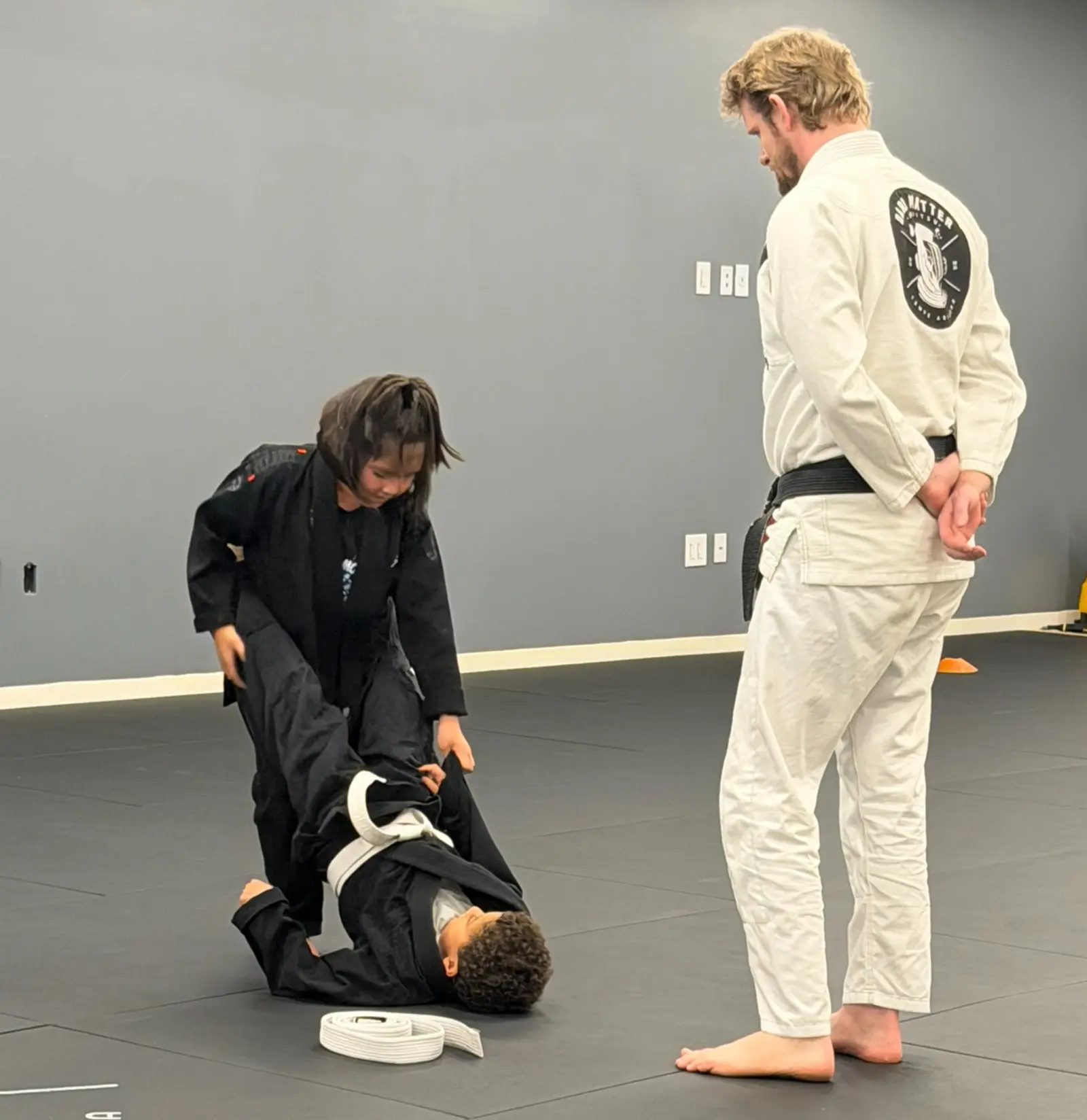
BJJ is a grappling-based martial art, governed internationally by the International Brazilian Jiu-Jitsu Federation (IBJJF). Kids learn how to control someone without punching or kicking. They learn takedowns, pins, escapes, and submissions. For children dealing with bullying, this is particularly valuable — they can control a situation and protect themselves without throwing a punch, which means they're far less likely to get in trouble at school.
Which one builds more confidence in children?
Both martial arts build confidence, but they do it differently. Karate builds confidence through memorized forms, belt progressions, and the discipline of repetitive practice. There's a structured path — you learn a form, perform it, earn a belt.
BJJ builds confidence through live problem-solving. In every class, your child will grapple with a partner and face real-time challenges. There's no choreography — they have to think, adapt, and find solutions. This type of pressure-tested confidence tends to transfer more directly to real-life situations like standing up to a bully, handling pressure at school, or dealing with unfamiliar social situations.
What about competition opportunities?
Both martial arts offer competition for kids, but the formats differ. Karate competitions include forms (kata) and point sparring, where kids try to score clean strikes. BJJ competitions are grappling matches where kids try to control, pin, or submit their opponent. Both are great for teaching kids about winning, losing, and performing under pressure.
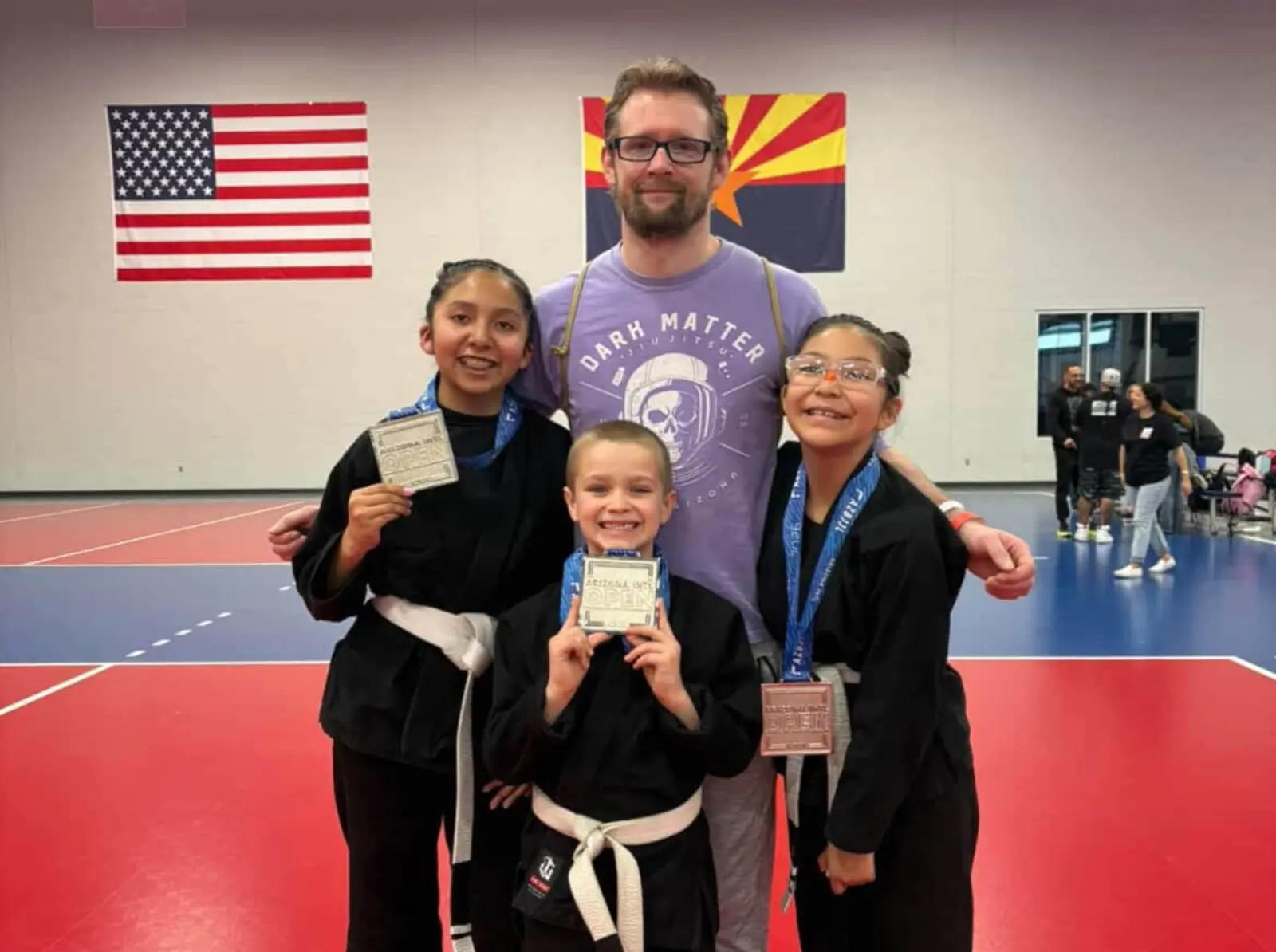
At Dark Matter Jiu-Jitsu, our Cadets compete regularly at tournaments like the Jiu-Jitsu World League in Phoenix. Competition is always optional — but the kids who compete grow faster and develop serious mental toughness. Our students consistently bring home medals.
Which martial art is safer for kids?
BJJ generally has a slight safety advantage for kids because there's no striking. Research from the National Library of Medicine supports that grappling sports have lower concussion rates than striking-based martial arts. Kids aren't getting punched or kicked, even in controlled sparring. The most common injuries in kids BJJ are minor — bruises, mat burns, and the occasional jammed finger. In karate, even with protective gear, contact striking carries a higher risk of impact injuries.
That said, both martial arts are safe when taught by qualified instructors in a structured environment. The gym and the instructor matter more than the art itself.
So which should I choose for my child?
If your priority is self-defense that works in real-world situations (especially against bullying), problem-solving ability, physical fitness through full-body engagement, and a tight-knit team environment — BJJ is probably the better fit.
If your child is drawn to striking, enjoys solo practice and memorization, or wants a more traditional martial arts experience — karate might be the way to go.
The best advice? Try both. Most gyms — including Dark Matter in Tempe — offer a free trial class. Bring your kid, let them experience it firsthand, and see which one lights them up. That's the one that'll stick.
CURIOUS ABOUT KIDS BJJ? TRY A FREE CLASS
No commitment. No contracts. Just come see what it's all about.
CLAIM YOUR FREE CLASS →